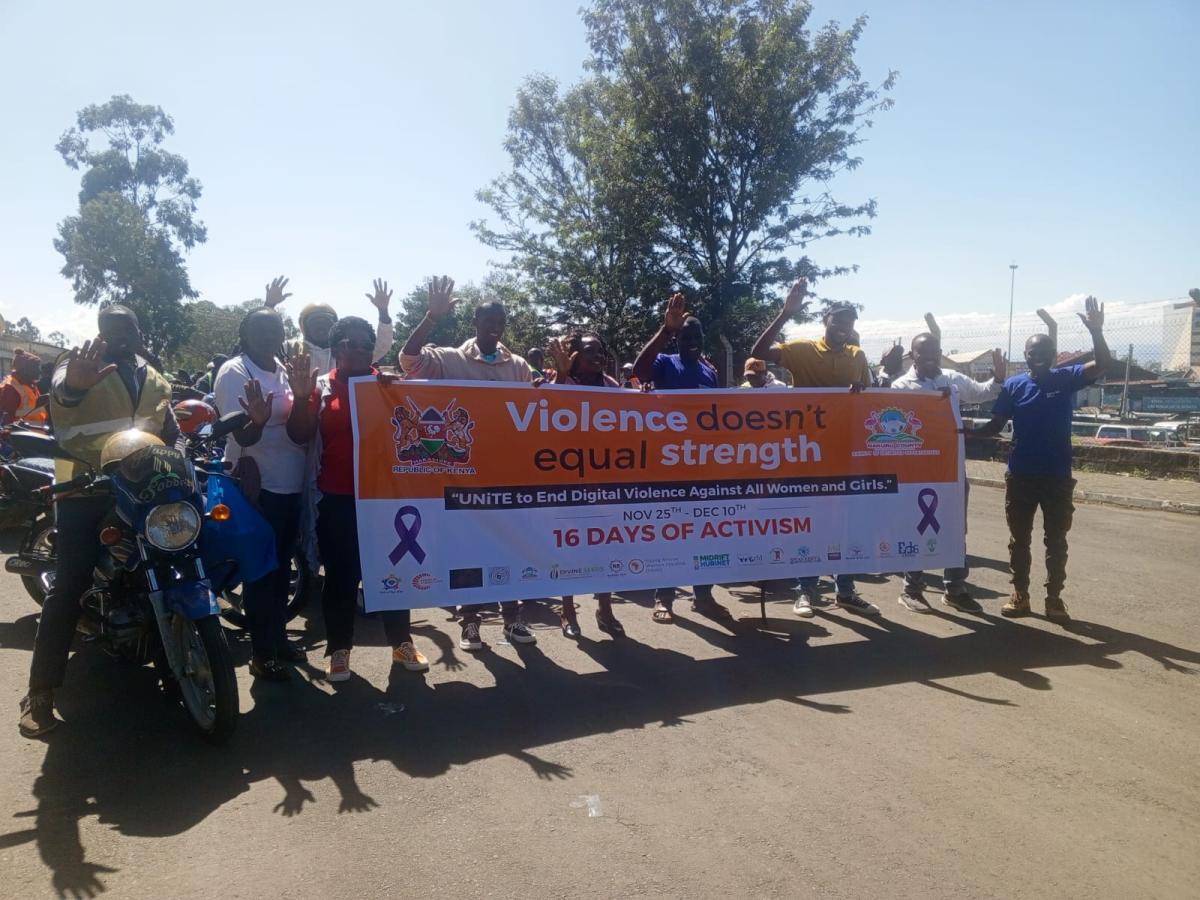
DISEFO partnered with the Nakuru County Gender Technical Working Group during the 16 Days of Activism to sensitize Boda Boda riders on safer public transport. The campaign addressed physical violence, sexual harassment and verbal abuse faced by women and girls, promoting collective action against all forms of violence. DISEFO remains committed to offering quality psychosocial support to survivors.
16 days of Activism against Gender-Based-Violence is an annual global campaign from November 25th to December 10th. The Goal is to raise awareness and promote action against all forms of gender-based violence, including physical, emotional, sexual, intimate partner violence, child marriage, teenage pregnancies (triple threat) and digital violence. The 2025 campaign focus highlights the growing “digital violence” which includes online harassment, non-consensual sharing of intimate images and digital violence.
Individuals can show support by participating in events, sharing information on social media using hashtags and wearing a white ribbon as a symbol of commitment against Violence
DISEFO joined efforts with Nakuru County Gender Technical Working Group in sensitizing the ‘Boda Boda” riders who form part of the transport sector. The focus was on issues around physical violence, sexual harassment and verbal abuse, experienced by many women and girls using public transport, the campaigns encourage collective effort to ensure safer commuter etiquette and creation of a culture where violence is not tolerated in the public transport
DISEFO is working to ensure all survivors who reach out for psychosocial support receive client centered quality timely response services. Talk to us and learn more - www.disefo.org
Donate to sustain psychosocial services www.disefo.org
16 reasons to end violence against women and girls
1. Violence is a fundamental human rights violation: Every women and girl has the right to live a life free from violence. A right enshrined in the Kenyan Constitution
2. Violence prevention is essential for gender equality; Achieving a world where women and men have equal rights and opportunities is impossible as long as violence continues
3. Ending Violence upholds dignity and respect; Ensuring that all women and girls can live with basic human dignity and respect that they deserve
4. Violence has lifelong health consequences; The physical, mental, sexual and reproductive health impacts can last a lifetime, including death
5. Violence disrupts healthy development; Exposure to violence in early childhood can interfere with healthy brain development, leading to long term challenges
6. Addressing violence improves public health by contributing to healthier individuals and communities
7. Violence holds back economic growth; Human and economic costs that include lost wages, absenteeism and reduced productivity, can drain a nations GDP
8. Addressing Violence expands opportunities for all; when women and girls are safe, they can access education, employment and participate fully in public life, which benefits everyone
9. It builds stronger, safer societies; Ensuring safety for women helps foster environments of equality and safety for all members
10. It is essential for justice and the rule of law; Ensuring legal protections are in place and enforced helps close gaps in justice system
11. It prevents future generations from harm; Ending cycle of violence now prevents it from being normalized and perpetuated in the next generations
12. It strengthens community security; Addressing violence at its root makes communities more stable and secure
13. To end harmful practices; This includes stopping forms of abuse like female genital mutilation, child marriage, human trafficking which disproportionately affect women and girls
14. to combat new forms of abuse: The rise of digital and technology-facilitated abuse required specific action to ensure safety in all spaces, online and offline
15. to protect women in conflict zones; Women and girls face unique vulnerabilities in fragile and conflict-affected settings, where violence figures are even higher
16. to ensure individual can reach their full potential; a world free from violence is a world where every woman and girl can thrive and achieve her full potential contributing her unique talents and perspectives to the world
Individuals can show support by participating in events, sharing information on social media using hashtags and wearing a white ribbon as a symbol of commitment against Violence
DISEFO joined efforts with Nakuru County Gender Technical Working Group in sensitizing the ‘Boda Boda” riders who form part of the transport sector. The focus was on issues around physical violence, sexual harassment and verbal abuse, experienced by many women and girls using public transport, the campaigns encourage collective effort to ensure safer commuter etiquette and creation of a culture where violence is not tolerated in the public transport
DISEFO is working to ensure all survivors who reach out for psychosocial support receive client centered quality timely response services. Talk to us and learn more - www.disefo.org
Donate to sustain psychosocial services www.disefo.org
16 reasons to end violence against women and girls
1. Violence is a fundamental human rights violation: Every women and girl has the right to live a life free from violence. A right enshrined in the Kenyan Constitution
2. Violence prevention is essential for gender equality; Achieving a world where women and men have equal rights and opportunities is impossible as long as violence continues
3. Ending Violence upholds dignity and respect; Ensuring that all women and girls can live with basic human dignity and respect that they deserve
4. Violence has lifelong health consequences; The physical, mental, sexual and reproductive health impacts can last a lifetime, including death
5. Violence disrupts healthy development; Exposure to violence in early childhood can interfere with healthy brain development, leading to long term challenges
6. Addressing violence improves public health by contributing to healthier individuals and communities
7. Violence holds back economic growth; Human and economic costs that include lost wages, absenteeism and reduced productivity, can drain a nations GDP
8. Addressing Violence expands opportunities for all; when women and girls are safe, they can access education, employment and participate fully in public life, which benefits everyone
9. It builds stronger, safer societies; Ensuring safety for women helps foster environments of equality and safety for all members
10. It is essential for justice and the rule of law; Ensuring legal protections are in place and enforced helps close gaps in justice system
11. It prevents future generations from harm; Ending cycle of violence now prevents it from being normalized and perpetuated in the next generations
12. It strengthens community security; Addressing violence at its root makes communities more stable and secure
13. To end harmful practices; This includes stopping forms of abuse like female genital mutilation, child marriage, human trafficking which disproportionately affect women and girls
14. to combat new forms of abuse: The rise of digital and technology-facilitated abuse required specific action to ensure safety in all spaces, online and offline
15. to protect women in conflict zones; Women and girls face unique vulnerabilities in fragile and conflict-affected settings, where violence figures are even higher
16. to ensure individual can reach their full potential; a world free from violence is a world where every woman and girl can thrive and achieve her full potential contributing her unique talents and perspectives to the world